Press

2025
2024
2023
2022
2020-2021
2019
2018
2017
2016
2015
2014
2013
2012
2011
2010
2009

 DECEMBRE 2013

ARTICLE N° 195

 DECEMBRE 2013

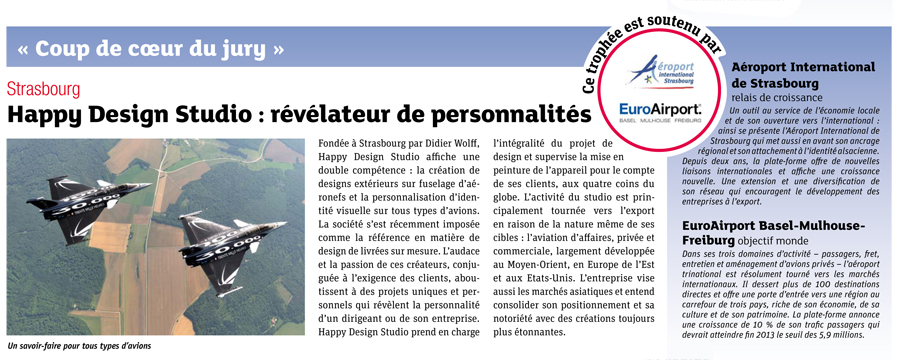
Read full article (text version) Source : CCI Strasbourg / This article is reproduced for archival purposes. « Coup de cur du jury » Happy Design Studio : révélateur de personnalités Fondée à Strasbourg par Didier Wolff, Happy Design Studio affiche une double compétence : la création de designs extérieurs sur fuselage d’aéronefs et la personnalisation d’identité visuelle sur tous types d’avions. La société s’est récemment imposée comme la référence en matière de design de livrées sur mesure. L’audace et la passion de ses créateurs, conjuguée à l’exigence des clients, aboutissent à des projets uniques et personnels qui révèlent la personnalité d’un dirigeant ou de son entreprise. Happy Design Studio prend en charge l’intégralité du projet de design et supervise la mise en peinture de l’appareil pour le compte de ses clients, aux quatre coins du globe. L’activité du studio est principalement tournée vers l’export en raison de la nature même de ses cibles : l’aviation d’affaires, privée et commerciale, largement développée au Moyen-Orient, en Europe de l’Est et aux Etats-Unis. L’entreprise vise ainsi les marchés asiatiques et entend consolider son positionnement et sa notoriété avec des créations toujours plus étonnantes. Un savoir-faire pour tous types d’avions Aéroport International Strasbourg EuroAirport Basel-Mulhouse-Freiburg

ARTICLE N° 194 / EURO AIRPORT

 DECEMBRE 2013

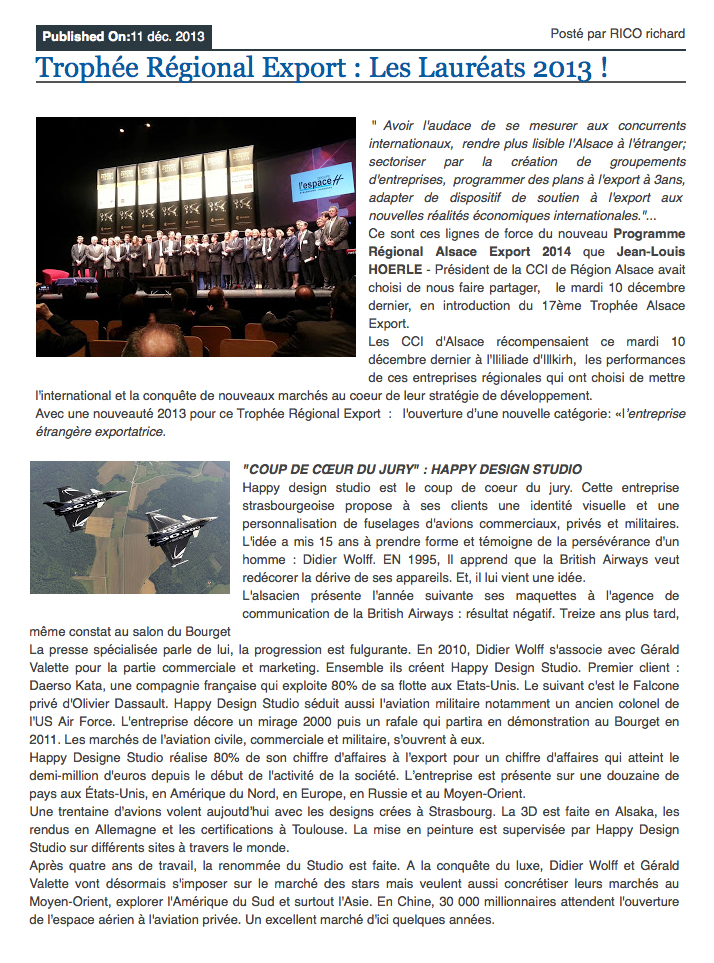
Read full article (text version) Published On:11 déc. 2013 Posté par RICO richard Source : Trophée Régional Export / This article is reproduced for archival purposes. Les Lauréats 2013 ! ” Avoir l’audace de se mesurer aux concurrents internationaux, rendre plus lisible l’Alsace à l’étranger; sectoriser par la création de groupements d’entreprises, programmer des plans à l’export à 3ans, adapter ce dispositif de soutien à l’export aux nouvelles réalités économiques internationales… Ce sont ces lignes de force du nouveau Programme Régional Alsace Export 2014 que Jean-Louis HOERLE – Président de la CCI de Région Alsace avait choisi de nous faire partager, le mardi 10 décembre dernier, en introduction du 17ème Trophée Alsace Export. Les CCI d’Alsace récompensaient ce mardi 10 décembre dernier à l’Illiade d’Illkirch, les performances de ces entreprises régionales qui ont choisi de mettre l’international et la conquête de nouveaux marchés au coeur de leur stratégie de développement. Avec ce nouveau millésime 2013 pour ce Trophée Régional Export : l’ouverture d’une nouvelle catégorie : « l’entreprise étrangère exportatrice ». “COUP DE CUR DU JURY” : HAPPY DESIGN STUDIO Happy design studio est le coup de cur du jury. Cette entreprise strasbourgeoise propose à ses clients une identité visuelle et une personnalisation de fuselages d’avions commerciaux, privés et militaires. L’idée a mis 15 ans à prendre forme et témoigne de la persévérance d’un homme : Didier Wolff. En 1995, il apprend que la British Airways veut redécorer la dérive de ses appareils. Et, il lui vient une idée. L’alsacien présente l’année suivante ses maquettes à l’agence de communication de la British Airways : résultat négatif. Treize ans plus tard, même constat au salon du Bourget. La presse spécialisée parle de lui, la progression est fulgurante. En 2010, Didier Wolff s’associe avec Gérald Valette pour la partie commerciale et marketing. Ensemble ils créent Happy Design Studio. Premier client : Daerso Kata, une compagnie française qui exploite 80% de sa flotte aux Etats-Unis. Le suivant c’est le Falcon privé d’Olivier Dassault. Happy Design Studio séduit aussi l’aviation militaire notamment un ancien colonel de l’US Air Force. L’entreprise décore un mirage 2000 puis un rafale qui partira en démonstration au Bourget en 2011. Les marchés de l’aviation civile, commerciale et militaire, s’ouvrent à eux. Happy Design Studio réalise 80% de son chiffre d’affaires à l’export pour un chiffre d’affaires qui atteint le demi-million d’euros depuis le début de l’activité de la société. L’entreprise est présente sur une douzaine de pays aux États-Unis, en Amérique du Nord, en Europe, en Russie et au Moyen-Orient. Une trentaine d’avions volent aujourd’hui avec les designs créés à Strasbourg. La 3D est faite en Alaska, les rendus en Allemagne et les certifications à Toulouse. La mise en peinture est supervisée par Happy Design Studio sur différents sites à travers le monde. Après quatre ans de travail, la renommée du Studio est faite. A la conquête du luxe, Didier Wolff et Gérald Valette vont désormais s’imposer sur le marché des stars mais veulent aussi concrétiser leurs marchés au Moyen-Orient, explorer l’Amérique du Sud et surtout l’Asie. En Chine, 30 000 millionnaires attendent l’ouverture de l’espace aérien à l’aviation privée. Un excellent marché d’ici quelques années.

ARTICLE N° 193 / TROPHEE REGIONAL EXPORT

 DECEMBRE 2013

ARTICLE N° 192 / ULTIMATE JET

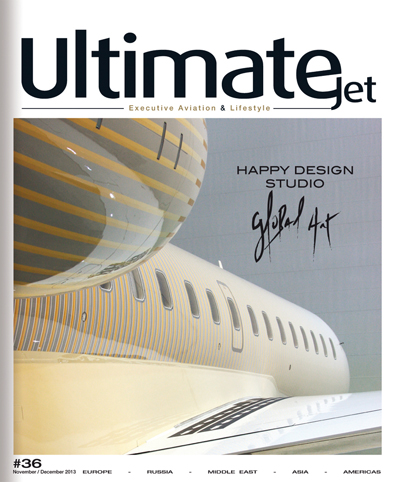
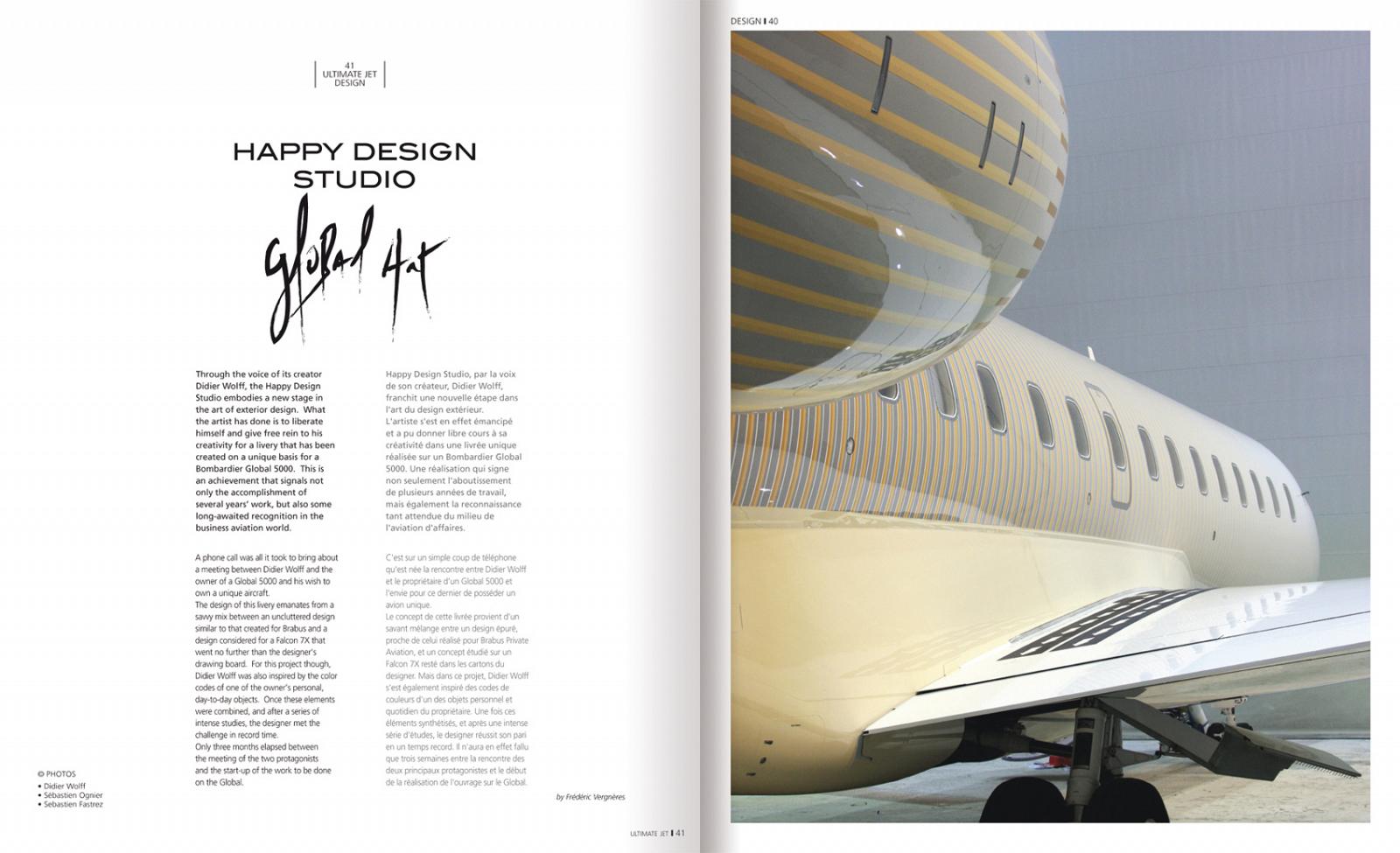
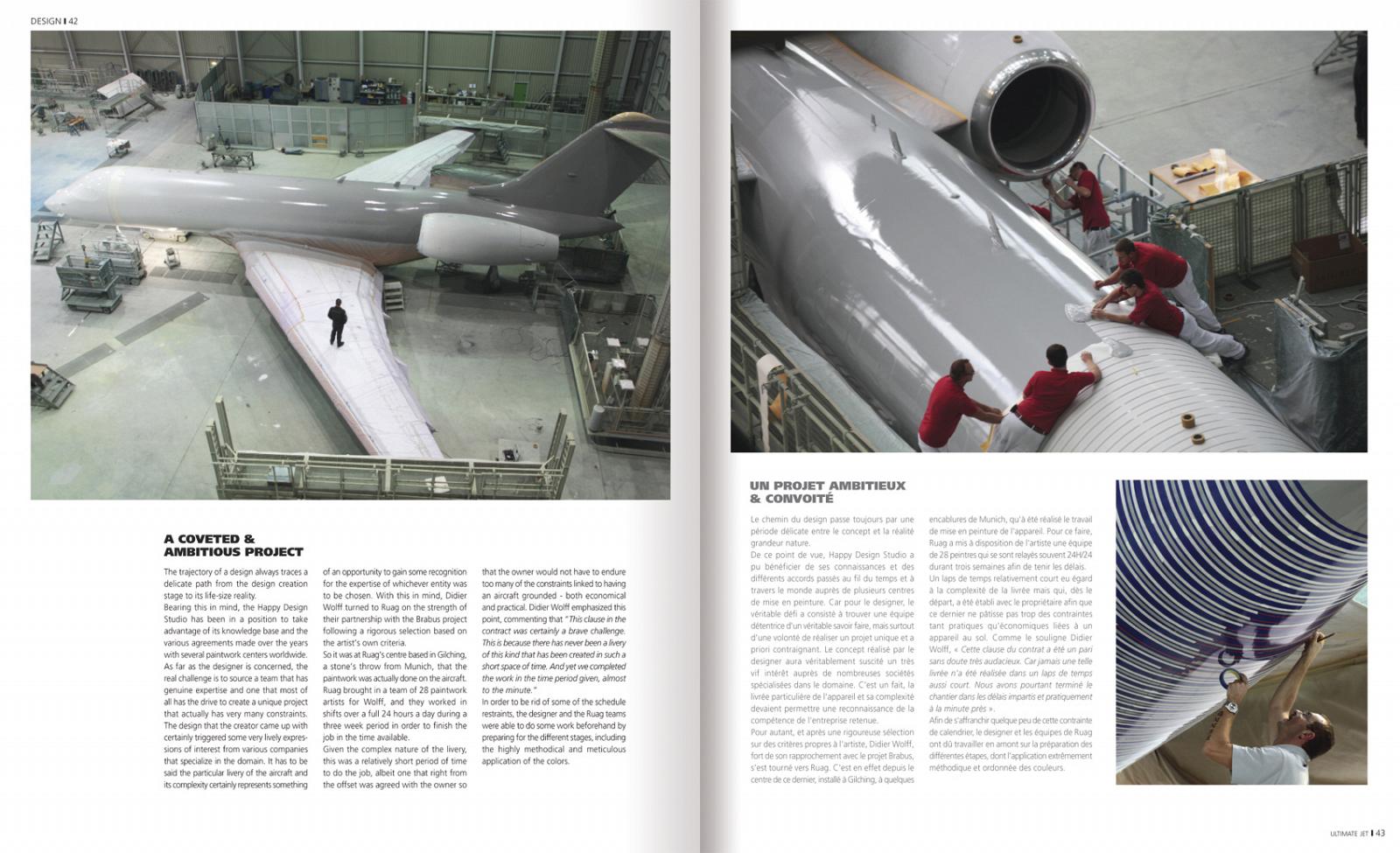
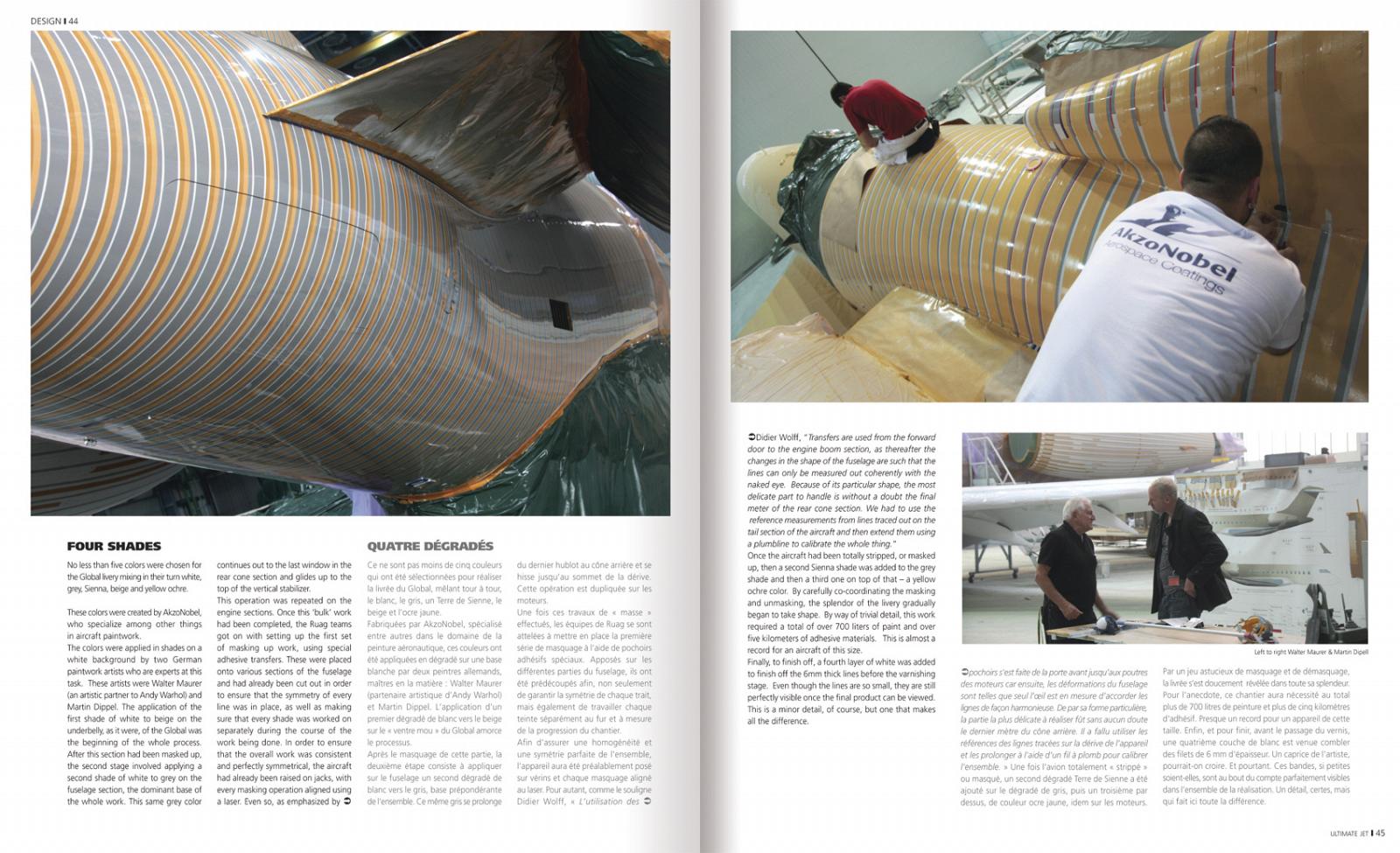
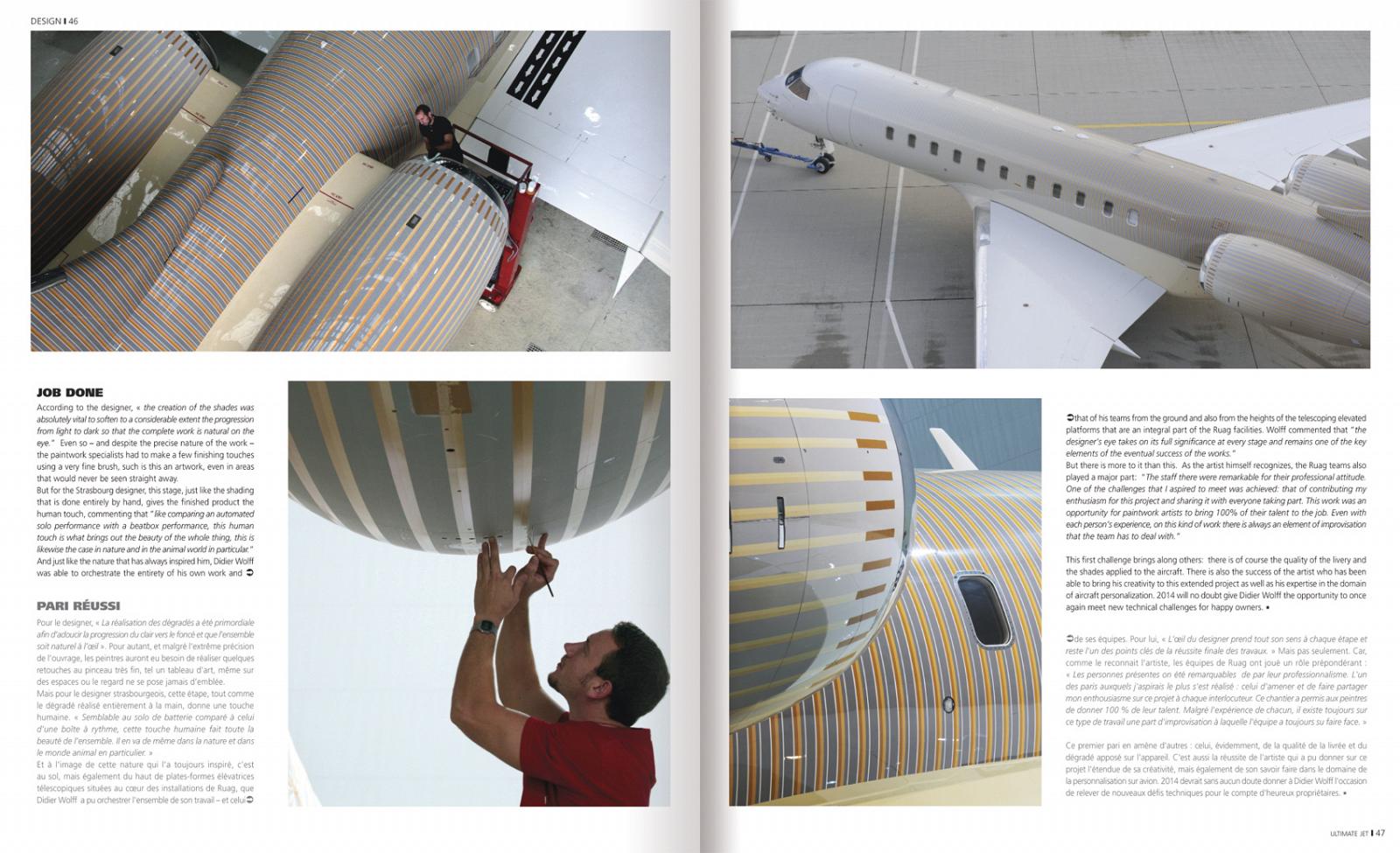
Read full article (text version) Source ULTIMATE JET DESIGN / This article is reproduced for archival purposes. HAPPY DESIGN STUDIO global art Through the voice of its creator Didier Wolff, the Happy Design Studio embodies a new stage in the art of exterior design. What the artist has done is to liberate himself and give free rein to his creativity for a livery that has been created on a unique basis for a Bombardier Global 5000. This is an achievement that signals not only the accomplishment of several years’ work, but also some long-awaited recognition in the business aviation world. A phone call was all it took to bring about a meeting between Didier Wolff and the owner of a Global 5000 who wished to own a unique aircraft. The design of this livery emanates from a savvy mix between an uncluttered design similar to that created for Brabus and a design considered for a Falcon 7X that went no further than the designer’s drawing board. For this project though, Didier Wolff was also inspired by the color codes of one of the owner’s personal, day-to-day objects. Once these elements were combined, and after a series of intense studies, the designer met the challenge in record time. Only three months elapsed between the meeting of the two protagonists and the start-up of the work to be done on the Global. Happy Design Studio, par la voix de son créateur, Didier Wolff, franchit une nouvelle étape dans l’art du design extérieur. L’artiste s’est en effet émancipé et a pu donner libre cours à sa créativité dans une livrée unique réalisée sur un Bombardier Global 5000. Une réalisation qui signe non seulement l’aboutissement de plusieurs années de travail, mais également la reconnaissance tant attendue du milieu de l’aviation d’affaires. C’est sur un simple coup de téléphone que s’est faite la rencontre entre Didier Wolff et le propriétaire d’un Global 5000 venu lui demander de créer un avion unique. Le concept de cette livrée provient d’un savant mélange entre un design épuré proche de celui réalisé pour Brabus Private Aviation et un concept étudié sur un Falcon 7X resté dans les cartons du designer. Mais dans ce projet, Didier Wolff s’est également inspiré des codes de couleurs d’un des objets personnels du propriétaire. Une fois ces éléments synthétisés, et après une intense série d’études, le designer réussit son pari en un temps record. Il n’aura en effet fallu que trois mois entre la rencontre des deux protagonistes et le début de la réalisation de l’ouvrage sur le Global. A COVETED & AMBITIOUS PROJECT The trajectory of a design always traces a delicate path from the design creation stage to its life-size reality. Bearing this in mind, the Happy Design Studio has been in a position to take advantage of its knowledge base and the various agreements made over the years with several partners centers worldwide. As far as the designer is concerned, the real challenge is to source a team that has genuine expertise and one that most of all has the drive to create a unique project that actually has very many constraints. The design that the creator came up with certainly triggered some very lively expressions of interest from various companies that specialize in the domain. It has to be said that the particular livery of the aircraft and its complexity certainly represents something of an opportunity to gain some recognition for the expertise of whichever entity was to be chosen. With this in mind, Didier Wolff turned to Ruag on the strength of the partnership with Sebrus project following a rigorous selection based on the artist’s own criteria. So it was at Ruag’s centre based in Gilching, a stone’s throw from Munich, that the painting work was actually done on the aircraft. Ruag brought in a team of 28 paint specialists for Wolff, and they worked in shifts over a full 24 hours a day during a three week period in order to finish the job in time available. Given the complex nature of the livery, this was a relatively short period of time to do the job, albeit the rate might have been right from the offset was agreed with the owner so that the owner would not have to endure too many of the constraints linked to having an aircraft grounded – both economical and practical. Didier Wolff emphasizes this point, commenting that “This clause in the contract was certainly a brave challenge. This is because there has never been a livery of this kind that has been created in such a short space of time. And yet we completed the work in the time period given, almost to the minute.” In order to be rid of some of the schedule restraints, the designer and the Ruag teams were able to do some work beforehand by preparing for the different stages, including the highly methodical and meticulous application of the colors. UN PROJET AMBITIEUX & CONVOITÉ Le chemin du design passe toujours par une période de maturation et le concept est souvent retravaillé. De ce point de vue, Happy Design Studio a pu bénéficier de ses connaissances et des différents accords passés au fil du temps et à travers le monde avec plusieurs centres de mise en peinture. Car pour le designer, le véritable défi consiste à trouver une équipe dotée d’un véritable savoir-faire, mais surtout d’une volonté de réaliser un projet unique et prioritairement contraignant. Le concept réalisé par le designer aura véritablement suscité un très vif intérêt auprès de nombreuses entreprises dans le domaine. C’est un fait, la livrée particulière de l’appareil et sa complexité ont permis de mettre en valeur la reconnaissance et la compétence de l’entreprise retenue. Pour autant, et après une sélection sur des critères propres à l’artiste, Didier Wolff s’est tourné vers Ruag. C’est en effet dans ce centre de Gilching, installé à quelques encablures de Munich, qu’a été réalisé le travail de mise en peinture de l’appareil. Pour ce faire, Ruag a mis à disposition de l’artiste une équipe de 28 peintres qui se sont relayés souvent 24h/24 durant trois semaines afin de tenir les délais. Un laps de temps relativement court eu égard à la complexité de la livrée mais qui, dès le départ, a été établi avec le propriétaire afin que ce dernier ne pâtisse pas trop des contraintes pratiques et économiques liées à un appareil au sol. Comme le souligne Didier Wolff, « cette clause du contrat a été un pari sans doute très audacieux. Car jamais une telle livrée n’a été réalisée dans un laps de temps aussi court. Nous avons pourtant terminé le chantier dans les délais impartis et pratiquement à la minute près ». Afin de s’affranchir quelque peu de cette contrainte calendaire, le designer et les équipes de Ruag ont dû travailler en amont sur la préparation des différentes étapes, dont l’application très méthodique et ordonnée des couleurs. FOUR SHADES No less than five colors were chosen for the Global livery mixing in their turn white, grey, Sienna, beige and yellow ochre. These colors were created by AkzoNobel, who specialize among other things in aircraft paintwork. The colors were applied in shades on a white background by two German paint work artists who are experts in the task. These artists were Walter Maurer (an artistic partner to Andy Warhol) and Martin Dippel. The application of the first shade of white to beige on the underbelly, as it were, of the Global was the beginning of the whole process. After this section had been masked up, the second shade involved applying a second shade of white to grey on the fuselage section, the dominant base of the whole work. This same grey color continues out to the last window in the rear cone section and glides up to the top of the vertical stabilizer. This operation was repeated on the engine sections. Once this “bulk” work had been completed, the fuselage team got on with setting up the first sets of masking up work, using special adhesive transfers. These were placed onto various sections of the fuselage and had already been cut out in order to ensure that the symmetry of every line was in place, as well as making sure that every shade was worked on separately during the course of the work being done. In order to ensure that the overall work was consistent and perfectly symmetrical, the aircraft had already been marked on jacks, with every masking operation aligned using a laser. Even so, as emphasized by Didier Wolff, “Transfers are used from the forward door to the engine boom section, as thereafter the changes in the shape of the fuselage are such that the lines can only be measured out coherently with the naked eye. Because of its particular shape, the most delicate part to handle is without a doubt the final meter of the rear cone section. We had to use the reference measurements from lines traced out on the tail of the aircraft, and then extend them using a plumbline to calibrate the whole thing.” Once the aircraft had been totally stripped, or masked up, then a second Sienna shade was added to the grey shade and then a third one on top of that – a yellow ochre color. By the cycle of painting and masking up, the splendid color of the livery gradually began to take shape. By way of trivial detail, this work required a total of over 700 liters of paint and over five kilometers of adhesive materials. This is almost a record for an aircraft of this size. Finally, to finish off, a fourth layer of white was added to the tips of the winglets lines before the varnishing stage. Even though the lines are so small, they are still perfectly visible once the final product can be viewed. This is a minute detail, of course, but one that makes all the difference. QUATRE DÉGRADÉS Ce ne sont pas moins de cinq couleurs qui ont été sélectionnées pour réaliser la livrée du Global, mêlant tour à tour le blanc, le gris, un terre de Sienne, le beige et l’ocre jaune. Fabriquées par AkzoNobel, spécialiste entre autres dans le domaine de la peinture aéronautique, ces couleurs ont été appliquées en dégradé sur une base blanche par deux peintres allemands, maîtres en la matière : Walter Maurer (partenaire artistique d’Andy Warhol) et Martin Dippel. L’application d’un premier dégradé de blanc vers le beige sur le « ventre » du Global annonce le processus. Après le masquage de cette partie, la deuxième étape consiste à appliquer sur le fuselage un second dégradé dans les gris, base prépondérante de l’ensemble. Ce même gris se prolonge du dernier hublot au cône arrière et se hisse jusqu’au sommet de la dérive. Cette opération est dupliquée sur les moteurs. Une fois ces travaux de « masse » achevés, les équipes de Ruag se sont attelées à mettre en place la première série de masquage à l’aide de pochoirs adhésifs spéciaux. Apposés sur les différentes parties du fuselage, ils ont été prédécoupés afin d’assurer la symétrie de chaque trait, mais également de travailler chaque teinte séparément au fur et à mesure. Afin d’assurer une homogénéité et une symétrie parfaite de l’ensemble, l’appareil a été préalablement posé sur vérins et chaque masquage aligné au laser. Pour autant, comme le souligne Didier Wolff, « l’utilisation des transferts se fait de la porte avant jusqu’aux poutres des moteurs car ensuite, les déformations du fuselage sont telles que seul l’il est en mesure d’accorder les lignes de façon cohérente. De par sa forme particulière, la partie la plus délicate à réaliser est sans aucun doute le dernier mètre du cône arrière. Il a fallu utiliser les références des lignes tracées sur la dérive de l’appareil et les prolonger à l’aide d’un fil à plomb pour calibrer l’ensemble. » Une fois l’avion totalement « stripé » ou masqué, un second dégradé de terre de Sienne a été ajouté sur le dégradé de gris, puis un troisième par-dessus, de couleur ocre jaune, sur les moteurs. Par un jeu astucieux de masquage et de démasquage, la livrée se dessine peu à peu dans toute sa splendeur. Pour l’anecdote, ce chantier aura nécessité au total plus de 700 litres de peinture et plus de cinq kilomètres d’adhésif. Presque un record pour un appareil de cette taille. Enfin, et pour parfaire la ligne des saumons d’ailes, un dernier trait blanc est venu combler des filets de 6 mm d’épaisseur. Un caprice d’artiste pourrait-on croire. Et pourtant, ces bandes, si petites soient-elles, sont au bout du compte parfaitement visibles dans l’ensemble de la réalisation. Un détail certes, mais qui fait ici toute la différence. JOB DONE According to the designer, « the creation of the shades was absolutely vital to soften to a considerable extent the progression from light to dark so that the complete work was natural on the eye ». Even so – and despite the precise nature of the work – the paintwork specialists had to make a few finishing touches using a very fine brush, such as this artwork, even in areas that would never be seen straight away. But for the Strasbourg designer, this stage, just like the shading that is done entirely by hand, gives the finished product the human touch, commenting that “like accompanying an automated solo performance with a beatbox performance, this human touch is what brings out the beauty of the whole thing, this is likewise the case in nature and in the animal world in particular”. And just like the nature that has always inspired him, Didier Wolff was able to orchestrate the entirety of his own work and PARI RÉUSSI Pour le designer, « la réalisation des dégradés a été primordiale afin d’adoucir la progression du clair vers le foncé et que l’ensemble soit naturel à l’il ». Pour autant, et malgré l’extrême précision de l’ouvrage, les peintres auront eu besoin de réaliser quelques retouches au pinceau très fin, tel un tableau d’art, même sur des espaces où le regard ne se pose jamais d’emblée. Mais pour le designer strasbourgeois, cette étape, tout comme le dégradé réalisé entièrement à la main, donne une touche humaine. « Semblable au solo de batterie comparé à celui d’une boîte à rythme, cette touche humaine fait toute la beauté de l’ensemble », même dans la nature et dans le monde animal en particulier. Et à l’image de cette nature qui l’a toujours inspiré, Didier Wolff a su orchestrer l’ensemble de son travail « et celui de ses équipes » depuis le sol mais également depuis les hauteurs des plates-formes élévatrices télescopiques au cur des installations de Ruag. DESIGN | 47 …that of his teams from the ground and also from the heights of the telescoping elevated platforms that are an integral part of the Ruag facilities. Wolff commented that “the designer’s eye takes in its full significance at every stage and remains one of the key elements of the eventual success of the works.” But there is more to this. As the artist himself recognizes, the Ruag teams also played a major part: “The staff there have remarkable professional aptitude. One of the challenges that I aspired to meet was achieved: that of contributing my enthusiasm for this project and sharing it with everyone taking part. This work was an opportunity for paintwork artists to bring 100% of their talent to the job. Even with each person’s experience, this kind of work where there is always an element of improvisation that the team has to deal with.” This first challenge brings among others: there is of course the quality of the livery and the shades applied to the aircraft. There is also the success of the artist who has been able to bring his creativity to this extended project as well as his expertise in the domain of aircraft personalization. 2014 will also no doubt give Didier Wolff the opportunity to once again meet new technical challenges for happy owners. © PHOTOS Didier Wolff Sébastien Ognier Sébastien Fastrez by Frédéric Vergères

 NOVEMBRE 2013

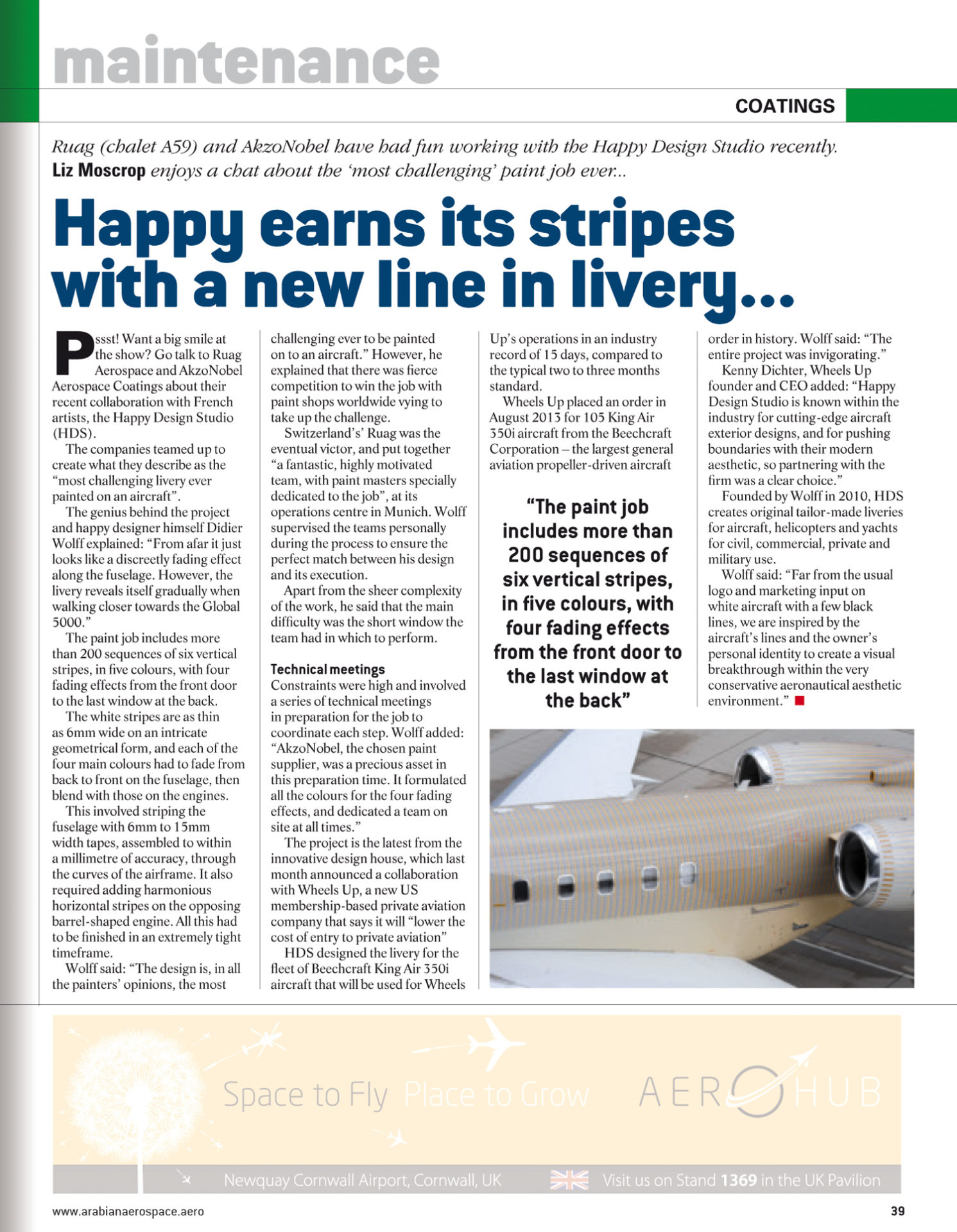
Read full article (text version) Source : Show Business Dubai / This article is reproduced for archival purposes. Maintenance COATINGS Ruag (chalet A59) and AkzoNobel have had fun working with the Happy Design Studio recently. Liz Moscrop enjoys a chat about the ‘most challenging’ paint job ever… Happy earns its stripes with a new line in livery… Pssst! Want a big smile at the show? Go talk to Ruag Aerospace and AkzoNobel Aerospace Coatings about their recent collaboration with French artists, the Happy Design Studio (HDS). The companies teamed up to create what they describe as the “most challenging livery ever painted on an aircraft”. The genius behind the project and happy designer himself Didier Wolff explained: “From afar it just looks like a discreetly fading effect along the fuselage. However, the livery reveals itself gradually when walking closer towards the Global 5000.” The paint job includes more than 200 sequences of six vertical stripes, in five colours, with four fading effects from the front door to the last window at the back. The white stripes are as thin as 6mm wide on an intricate geometrical form, and each of the four main colours had to fade from back to front on the fuselage, then blend with those on the engines. This involved striping the fuselage with 6mm to 15mm width tapes, assembled to within a millimetre of accuracy, through the curves of the airframe. It also required adding harmonious horizontal stripes on the opposing barrel-shaped engine. All this had to be finished in an extremely tight timeframe. Wolff said: “The design is, in all the painters’ opinions, the most challenging ever to be painted on to an aircraft.” However, he explained that there was fierce competition to win the job with paint shops worldwide vying to take up the challenge. Switzerland’s Ruag was the eventual victor, and put together “a fantastic, highly motivated team, with paint masters specially dedicated to the job” at its operations centre in Munich. Wolff supervised the teams personally during the process to ensure the perfect match between his design and its execution. Apart from the sheer complexity of the work, he said that the main difficulty was the short window the team had in which to perform. Technical meetings Constraints were high and involved a series of technical meetings in preparation for the job to coordinate each step. Wolff added: “AkzoNobel, the chosen paint supplier, was a precious asset in this preparation time. It formulated all the colours for the four fading effects, and dedicated a team on site at all times.” The project is the latest from the innovative design house, which last month announced a collaboration with Wheels Up, a new US membership-based private aviation company that says it will “lower the cost of entry to private aviation”. HDS designed the livery for the fleet of Beechcraft King Air 350i aircraft that will be used for Wheels Up’s operations in an industry record of 15 days, compared to the typical two to three months standard. Wheels Up placed an order in August 2013 for 105 King Air 350i aircraft from the Beechcraft Corporation – the largest general aviation propeller-driven aircraft order in history. Wolff said: “The entire project was invigorating.” Kenny Dichter, Wheels Up founder and CEO, added: “Happy Design Studio is known within the industry for cutting-edge aircraft exterior designs, and for pushing boundaries with their modern aesthetic, so partnering with the firm was a clear choice.” Founded by Wolff in 2010, HDS creates original tailor-made liveries for aircraft, helicopters and yachts for civil, commercial, private and military use. Wolff said: “Far from the usual logo and marketing input on white aircraft with a few black lines, we are inspired by the aircraft’s lines and the owner’s personal identity to create a visual breakthrough within the very conservative aeronautical aesthetic environment.” Encadré “The paint job includes more than 200 sequences of six vertical stripes, in five colours, with four fading effects from the front door to the last window at the back”

ARTICLE N° 191 / SHOW BUSINESS

 SEPTEMBRE 2013

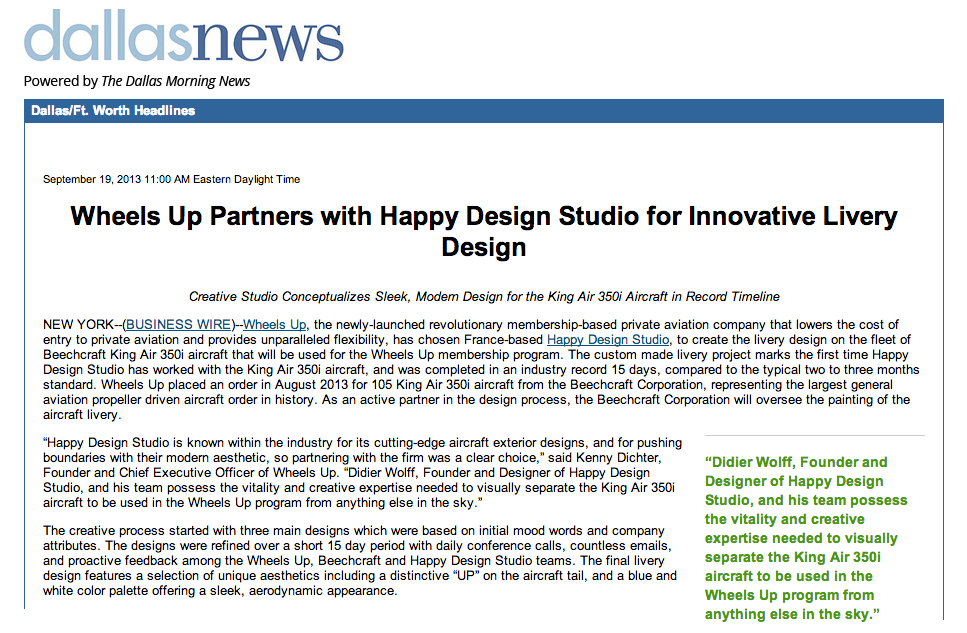
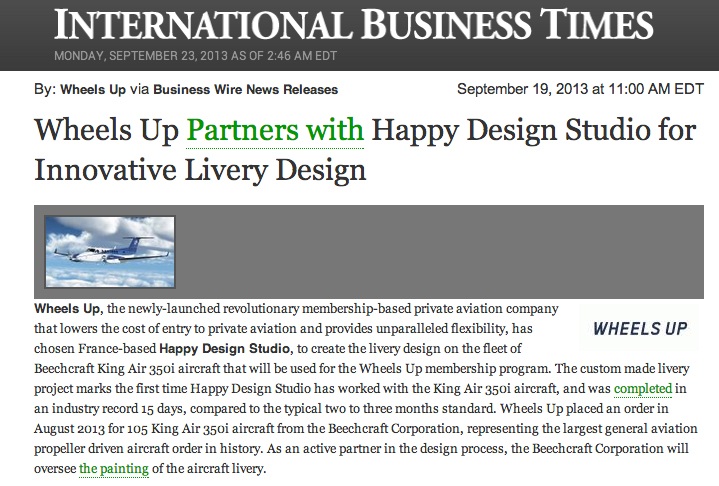
Read full article (text version) Source : dallasnews / This article is reproduced for archival purposes. Powered by The Dallas Morning News Dallas/Ft. Worth Headlines September 19, 2013 11:00 AM Eastern Daylight Time Wheels Up Partners with Happy Design Studio for Innovative Livery Design Creative Studio Conceptualizes Sleek, Modern Design for the King Air 350i Aircraft in Record Timeline NEW YORK—(BUSINESS WIRE)—Wheels Up, the newly-launched revolutionary membership-based private aviation company that lowers the cost of entry to private aviation and provides unparalleled flexibility, has chosen French-based Happy Design Studio to create the design for the fleet of Beechcraft King Air 350i aircraft that will be used for the Wheels Up membership program. The custom made livery project marks the first time Happy Design Studio has worked with the King Air 350i aircraft, and was completed in an industry record 15 days, compared to the typical two to three months standard. Wheels Up placed an order in August 2013 for 105 King Air 350i aircraft from the Beechcraft Corporation, representing the largest general aviation propeller driven aircraft order in history. As an active partner in the design process, the Beechcraft Corporation will oversee the painting of the aircraft livery. “Happy Design Studio is known within the industry for its cutting-edge aircraft exterior designs, and for pushing boundaries with their modern aesthetic, so partnering with the firm was a clear choice,” said Kenny Dichter, Founder and Chief Executive Officer of Wheels Up. “ Didier Wolff, Founder and Designer of Happy Design Studio, and his team possess the vitality and creative expertise needed to visually separate the King Air 350i aircraft to be used in the Wheels Up program from anything else in the sky.” The creative process started with three main designs which were based on initial mood words and company attributes. The designs were refined over a short 15 day period with daily conference calls, countless emails, and proactive feedback among the Wheels Up, Beechcraft and Happy Design Studio teams. The final livery design features a selection of unique aesthetics including a distinctive “UP” on the aircraft tail, and a blue and white color palette offering a sleek, aerodynamic appearance.

ARTICLE N° 190 / DALLAS NEWS

 SEPTEMBRE 2013

Read full article (text version) Source :INTERNATIONAL BUSINESS TIMES / This article is reproduced for archival purposes. MONDAY, SEPTEMBER 23, 2013, AS OF 2:46 AM EDT By: Wheels Up via Business Wire News Releases September 19, 2013 at 11:00 AM EDT Wheels Up Partners with Happy Design Studio for Innovative Livery Design Wheels Up, the newly-launched revolutionary membership-based private aviation company that lowers the cost of entry to private aviation and provides unparalleled flexibility, has chosen France-based Happy Design Studio to create the livery design on the fleet of Beechcraft King Air 350i aircraft that will be used for the Wheels Up membership program. The custom made livery project marks the first time Happy Design Studio has worked with the King Air 350i aircraft, and was completed in an industry record 15 days, compared to the typical two to three months standard. Wheels Up placed an order in August 2013 for 105 King Air 350i aircraft from the Beechcraft Corporation, representing the largest general aviation propeller driven aircraft order in history. As an active partner in the design process, the Beechcraft Corporation will oversee the painting of the aircraft livery

ARTICLE N° 189 / INTERNATIONAL BUSINESS TIME

 SEPTEMBRE 2013

Read full article (text version) Source :PILOOT EN VLIEGTUIG / This article is reproduced for archival purposes. De motor achter je passie Nieuws Wheels Up in de startblokken 24 september 2013 | 13 keer bekeken WICHITA – De Beechcraft Corporation begint binnenkort met de levering van de eerste negen King Air-toestellen aan Wheels Up, een nieuwe aanbieder van vliegtuigen in deeleigendom. Wheels Up tekende begin augustus een contract voor de levering van 35 King Air turboprops van het type 350i. Daarnaast werden opties genomen op nog eens 70 toestellen van dit type. De eerste negen vliegtuigen worden nog dit jaar geleverd. De overige 26 toestellen volgen in 2014 en 2015. Beechcraft is tevens aangewezen als onderhoudspartner voor de vloot, die zowel in Amerika als Europa zal worden gestationeerd. Wheels Up biedt de vliegtuigen aan via een lidmaatschapsprogramma. Specificaties – King Air 350i Capaciteit: 2 piloten + maximaal 8 passagiers Bereik: tot 3.000 km Kruissnelheid: 550 km/u Design & livery Het design van het nieuwe toestel is afkomstig van het Franse bedrijf Happy Design. Zij waren eerder verantwoordelijk voor de kleurstelling van de Learjet 75 en de Bombardier Global 7000. Daarnaast ontwierpen de Franse designers ook de nieuwe livery voor de vrachtvliegtuigen van Maximus Air. Voor dit ontwerp lieten zij zich inspireren door de zwarte keramische tegels van de space shuttles Space Shuttle Endeavour, Space Shuttle Columbia en Space Shuttle Challenger.

ARTICLE N° 188 / PILOOT EN VLIEGTUIG

 AOUT 2013

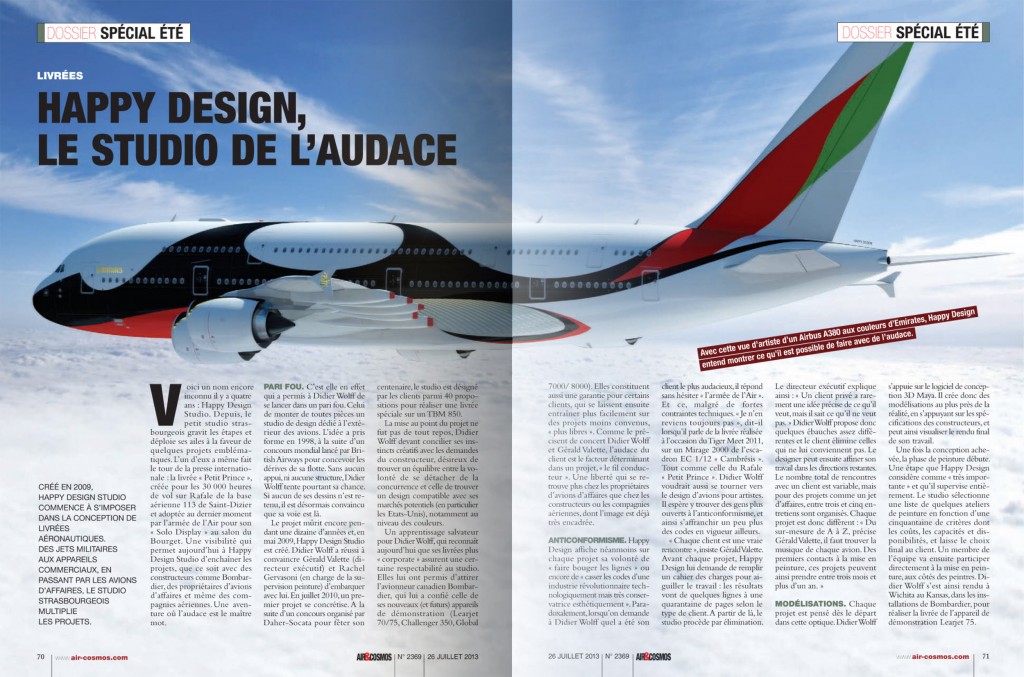
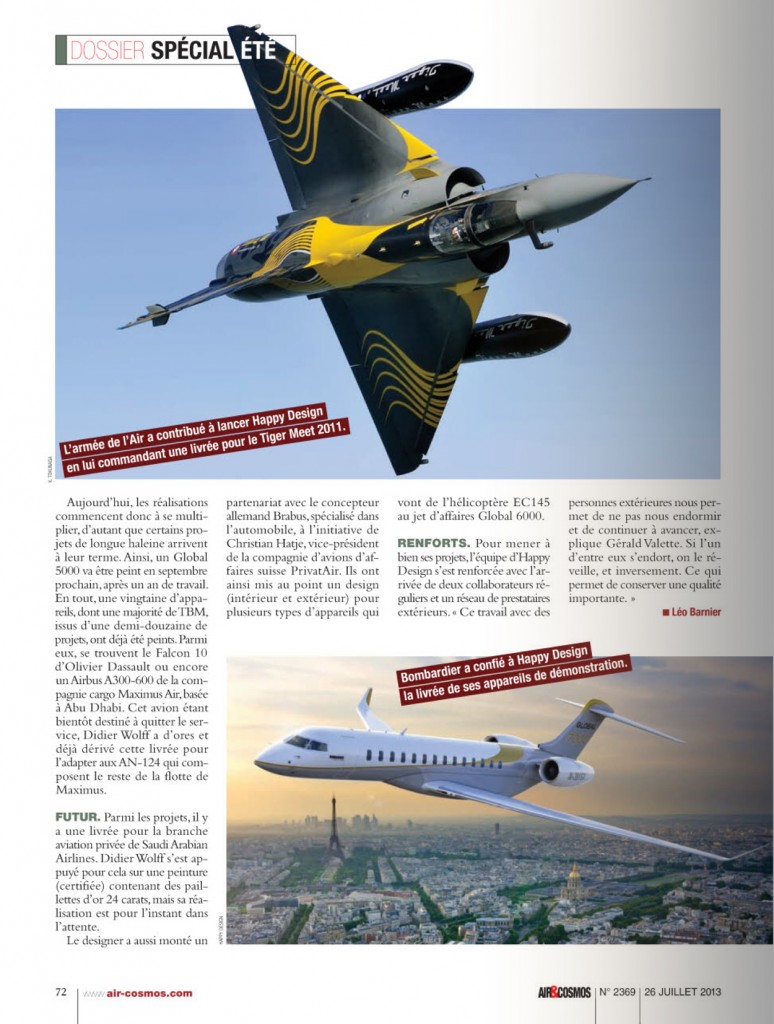
Read full article (text version) Source :AIR & COSMOS / DOSSIER SPÉCIAL ÉTÉ / This article is reproduced for archival purposes. LIVRÉES – HAPPY DESIGN, AIR & COSMOS | N°2369 | 26 JUILLET 2013 — Créé en 2009, Happy Design Studio commence à s’imposer dans la conception de livrées aéronautiques. Des jets militaires aux appareils commerciaux, en passant par les avions d’affaires, le studio strasbourgeois multiplie les projets. Voici un nom encore inconnu il y a quatre ans : Happy Design Studio. Depuis, il s’est imposé comme un studio très prisé pour les projets de livrées aéronautiques. L’idée a pris forme en 1998, à la suite d’une commande lancée par British Airways pour concevoir la queue de ses appareils. C’est à cette occasion que Didier Wolff tente sa chance. Le projet mûrit encore durant une dizaine d’années et, en 2009, Happy Design Studio est créé. Dès lors, le studio enchaîne les projets, que ce soit avec des constructeurs comme Bombardier, des propriétaires d’avions d’affaires ou encore des opérateurs aériens, dans une aventure où l’audace est le maître mot. C’est elle en effet qui a permis à Didier Wolff de se lancer dans un pari fou : redessiner les fuselages d’avions privés. L’idée née en 1998 à la suite de la commande de British Airways ne rencontre d’abord pas le succès, mais persiste. Didier Wolff poursuit son travail et développe une approche artistique de la livrée aéronautique. Chaque projet commence par une phase de modélisation numérique : les formes de l’avion sont analysées afin de concevoir une livrée compatible avec les contraintes techniques et aérodynamiques. Plusieurs propositions sont ensuite soumises au client avant d’aboutir au design final, un processus qui peut durer plusieurs semaines, voire plusieurs mois. Une fois la livrée validée, les équipes techniques se chargent de la mise en peinture, une opération particulièrement délicate. L’armée de l’Air a contribué à lancer Happy Design en lui commandant une livrée pour le Tiger Meet 2011. Aujourd’hui, les réalisations se multiplient, d’autant que certains projets de longue haleine arrivent à leur terme : ainsi, un Global 5000 doit être peint en septembre prochain après un an de travail. En tout, une vingtaine d’appareils, dont une majorité de TBM, issus d’une demi-douzaine de projets, sont déjà peints. Parmi eux figurent notamment le Falcon 10 d’Olivier Dassault ainsi qu’un Airbus A300-600 de la compagnie cargo Maximus Air basée à Abu Dhabi. Cet avion étant bientôt destiné à quitter le service, Didier Wolff a déjà adapté cette livrée aux AN-124 qui composent le reste de la flotte de Maximus. Parmi les projets en cours figure également une livrée pour la branche aviation privée de Saudi Arabian Airlines, pour laquelle Didier Wolff s’est appuyé sur une peinture certifiée contenant des paillettes d’or 24 carats, dont la réalisation reste pour l’instant en attente. Le designer a aussi noué un partenariat avec le concepteur allemand Brabus, spécialisé dans l’automobile, à l’initiative de Christian Hahn, vice-président de la compagnie d’avions d’affaires suisse PrivatAir. Ensemble, ils ont développé un design intérieur et extérieur pour plusieurs types d’appareils allant de l’hélicoptère EC145 au jet d’affaires Global 6000. Face à l’ampleur des projets, l’équipe d’Happy Design s’est renforcée avec l’arrivée de deux collaborateurs réguliers et d’un réseau de prestataires extérieurs. « Ce travail avec des personnes extérieures nous permet de ne pas nous endormir et de continuer à avancer », explique Gérald Valette. « Si l’un d’entre eux ralentit ou si le résultat dévie, il intervient, ce qui permet de conserver une qualité importante. » — Léo Barnier

ARTICLE N° 187 / AIR & COSMOS

 MAI 2013

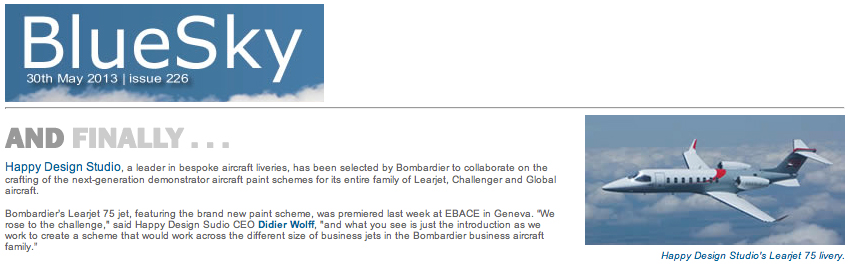
Read full article (text version) Source : BLUE SKY / This article is reproduced for archival purposes. AND FINALLY… Happy Design Studio, a leader in bespoke aircraft liveries, has been selected by Bombardier to collaborate on the creation of next-generation demonstrator paint schemes across its entire family of Learjet, Challenger and Global aircraft. Bombardier’s Learjet 75, featuring this brand-new livery, was unveiled last week at EBACE in Geneva. “We rose to the challenge,” said Happy Design Studio CEO Didier Wolff, “and what you see is only the beginning, as we work to develop a design language that can be applied consistently across the full range of Bombardier business jets.”

ARTICLE N° 186 / BLUE SKY

 MAI 2013

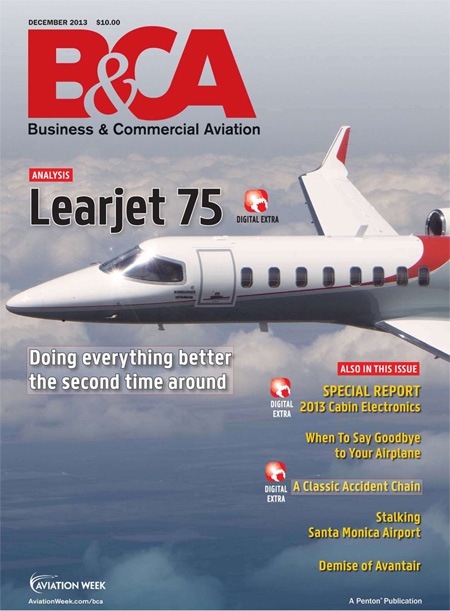
Read full article (text version) Source : SHOW NEWS EBACE / This article is reproduced for archival purposes. Happy Design for Bombardier Demonstrators — Bespoke aircraft livery specialist Happy Design Studio has been selected by Bombardier Business Aircraft to collaborate on the development of next-generation demonstrator paint schemes across its entire family of Learjet, Challenger and Global aircraft. The Learjet 75, making its debut at EBACE, showcases one of these new designs. “The creative scope is naturally very different when working on a business jet for a private owner compared to an airline,” explains Happy Design Studio CEO Didier Wolff. “For Bombardier, we worked closely with their Business Aircraft design and marketing teams to develop a new visual identity that not only reflects the Bombardier brand, but also integrates the distinct Learjet, Challenger and Global product lines. What is currently on display at EBACE is just the beginning, as we set out to create a design language adaptable across the full range of Bombardier business jets.” Stand 7011 for Bombardier.

ARTICLE N° 185 / SHOW NEWS EBACE

 MAI 2013

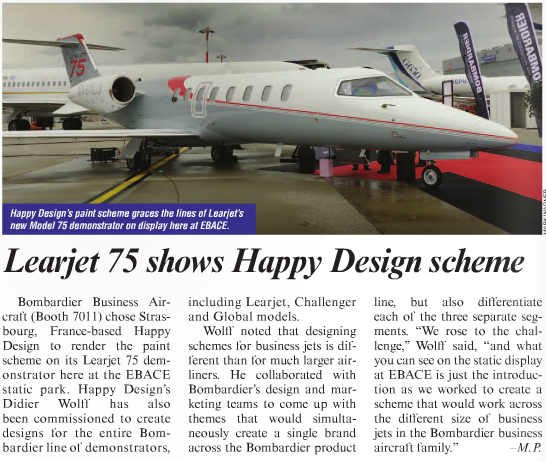
Read full article (text version) Source : EBACE CONVENTION NEWS Happy Design’s paint scheme graces the lines of Learjet’s new Model 75 demonstrator on display here at EBACE. Learjet 75 shows Happy Design scheme Bombardier Business Aircraft (Booth 7011) chose Strasbourg, France-based Happy Design to render the paint scheme on its Learjet 75 demonstrator at the EBACE static park. Happy Design’s Didier Wolffhas also been commissioned to create designs for the entire Bombardier line of demonstrators, including Learjet, Challenger and Global models. Wolff noted that designing schemes for business jets is different than for much larger airliners. He collaborated with Bombardier’s design and marketing teams to come up with themes that would simultaneously create a single brand across the Bombardier product line, but also differentiate each of the three separate segments. “We rose to the challenge,” Wolff said, “and what you see on the static display at EBACE is just the introduction as we worked to create a scheme that would work across the different size of business jets in the Bombardier business aircraft family.” — M.P.

ARTICLE N° 184 / EBACE CONVENTION NEWS

 MAI 2013

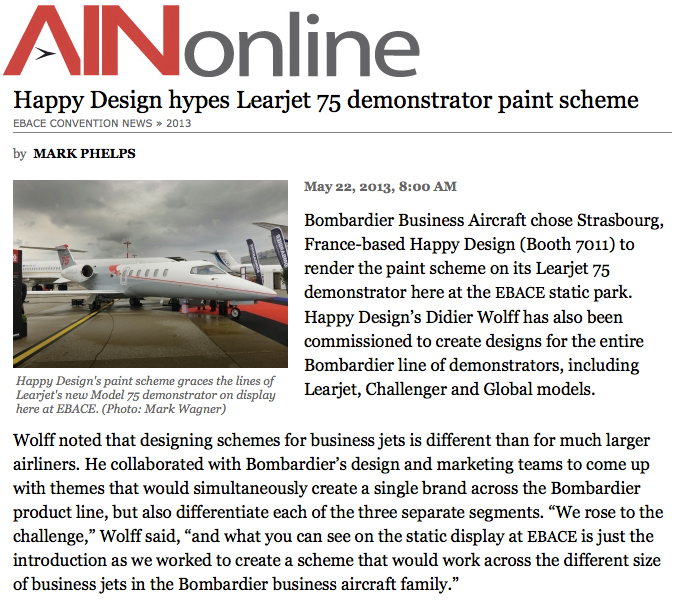
Read full article (text version) Source : AINonline — EBACE Convention News 2013 / This article is reproduced for archival purposes. May 22, 2013 — by Mark Phelps — Bombardier Business Aircraft selected Strasbourg, France-based Happy Design (Booth 7011) to develop the paint scheme for its Learjet 75 demonstrator showcased at the EBACE static park. Happy Design’s Didier Wolff has also been commissioned to create liveries for the entire Bombardier line of demonstrators, spanning Learjet, Challenger and Global models. (Photo caption: Happy Design’s paint scheme enhances the lines of Learjet’s new Model 75 demonstrator on display at EBACE. Photo: Mark Wagner.) Wolff emphasized that designing for business jets differs significantly from working on larger commercial aircraft. In close collaboration with Bombardier’s design and marketing teams, he developed visual concepts aimed at establishing a unified brand identity across the Bombardier product line, while clearly distinguishing each of its three segments. “We rose to the challenge,” Wolff stated, “and what is currently visible on the static display at EBACE is only the beginning, as we worked to create a scheme adaptable across the different sizes of business jets within the Bombardier business aircraft family.”

ARTICLE N° 183 / AIN ONLINE

 MARS 2013

ARTICLE N° 182 / ULTIMATE JET

 FEVRIER 2013

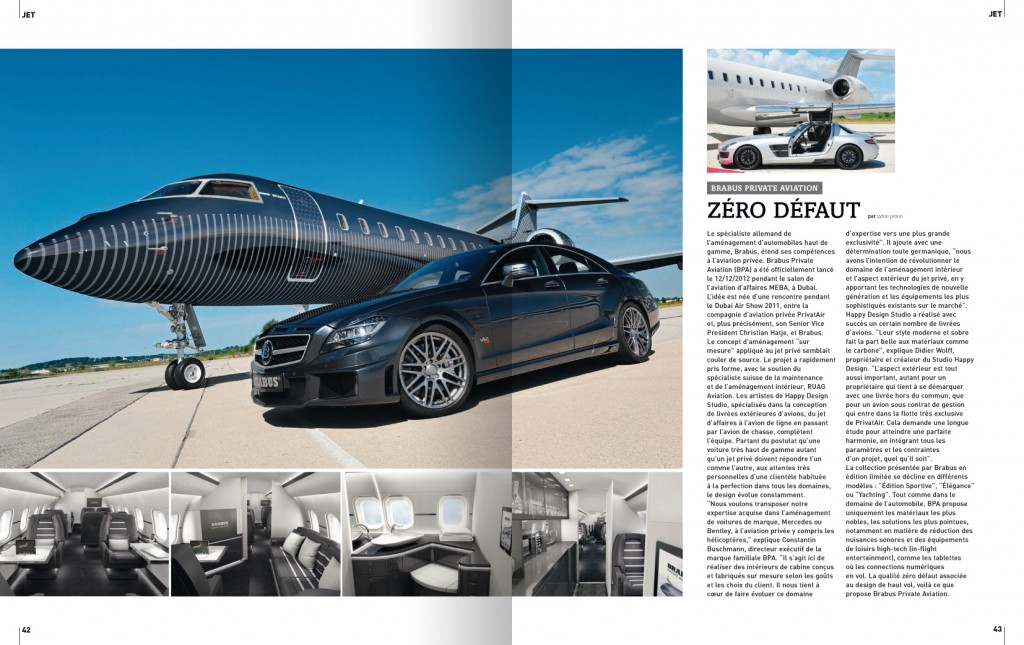
Read full article (text version) Source EDGAR / This article is reproduced for archival purposes. JET BRABUS PRIVATE AVIATION ZÉRO DÉFAUT Par Sylvie Prien — Le spécialiste allemand de l’aménagement automobile haut de gamme Brabus étend désormais son expertise à l’aviation privée. Brabus Private Aviation (BPA) a été officiellement lancé le 12 décembre 2012 lors du salon de l’aviation d’affaires MEBAA à Dubaï. L’idée est née d’une rencontre, lors du Dubai Air Show 2011, entre la compagnie d’aviation privée PrivatAir — et plus précisément son Senior Vice President Christian Hahn — et Brabus. Le concept d’aménagement s’est imposé naturellement et le projet a rapidement pris forme avec le soutien de spécialistes suisses de la maintenance et de l’aménagement intérieur, RUAG Aviation. Les designers de Happy Design Studio, experts du design extérieur, ont conçu les livrées des avions d’affaires, venant compléter l’ensemble. Partant du principe qu’une voiture très haut de gamme comme un jet privé doivent répondre au même niveau d’exigence et aux attentes élevées de clients habitués à la perfection, le design évolue en permanence. « Nous voulons transposer notre expertise acquise dans l’aménagement de voitures de marques comme Mercedes ou Bentley à l’aviation privée », explique Constantin Buschmann, directeur exécutif de la marque familiale BPA. « Il s’agit de concevoir et fabriquer des cabines entièrement sur mesure, selon les goûts et les choix du client. Nous avons à cœur de faire évoluer ce domaine vers une exclusivité toujours plus poussée. » Il ajoute avec détermination : « Notre ambition est de révolutionner l’aménagement intérieur et l’apparence extérieure du jet privé en intégrant les technologies les plus sophistiquées disponibles sur le marché. » Happy Design Studio a déjà signé plusieurs livrées d’avions avec succès. « Leur style moderne et épuré met en valeur les matériaux qui ont inspiré les projets », souligne Didier Wolff, fondateur du studio. L’aspect extérieur est tout aussi déterminant, qu’il s’agisse d’un propriétaire souhaitant se distinguer avec une livrée unique ou d’un appareil intégré à une flotte très exclusive comme celle de PrivatAir. Atteindre cette harmonie exige une étude approfondie, intégrant l’ensemble des contraintes techniques et des paramètres propres à chaque projet. La collection présentée par Brabus en édition limitée se décline en plusieurs thèmes — « Edition Sportive », « Elegance » ou « Yachting ». À l’image de l’automobile de luxe, BPA privilégie les matériaux les plus nobles et les solutions les plus avancées, notamment en matière de réduction du bruit et d’équipements de divertissement high-tech à bord. Une exigence de qualité sans compromis, associée à un design d’exception : telle est la promesse de Brabus Private Aviation.

ARTICLE N° 181 / EDGAR

 FEVRIER 2013

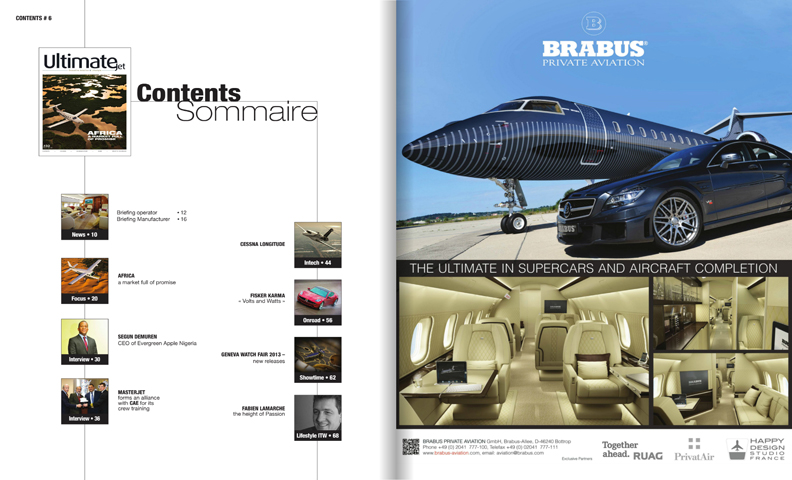
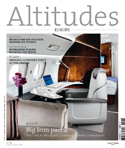
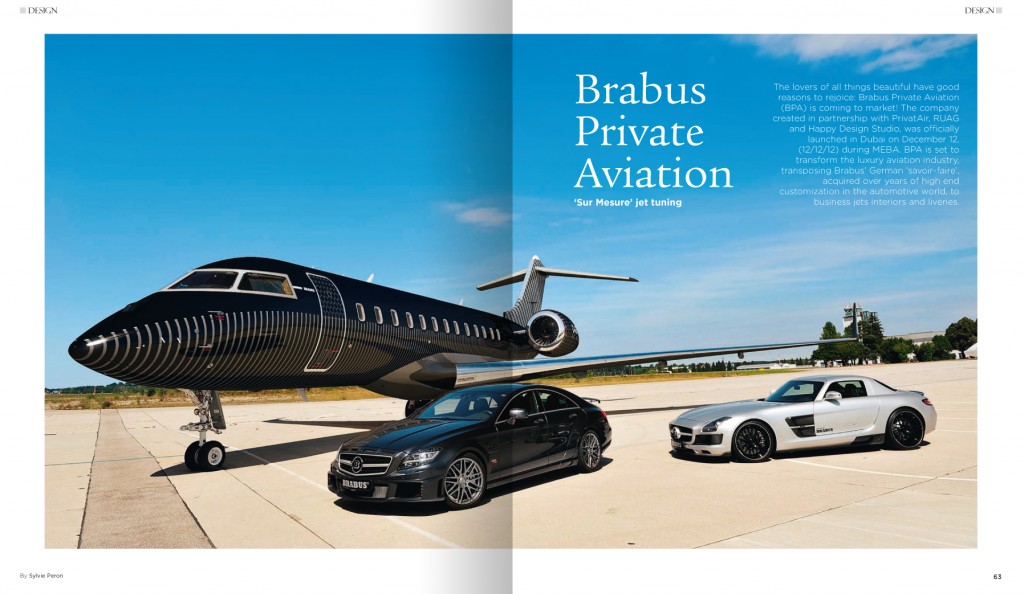
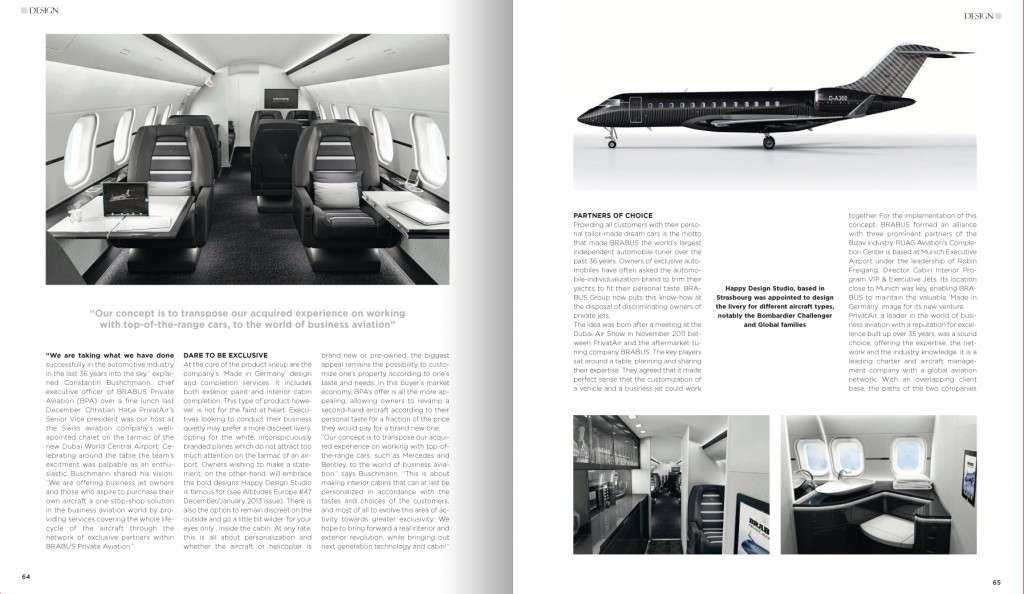
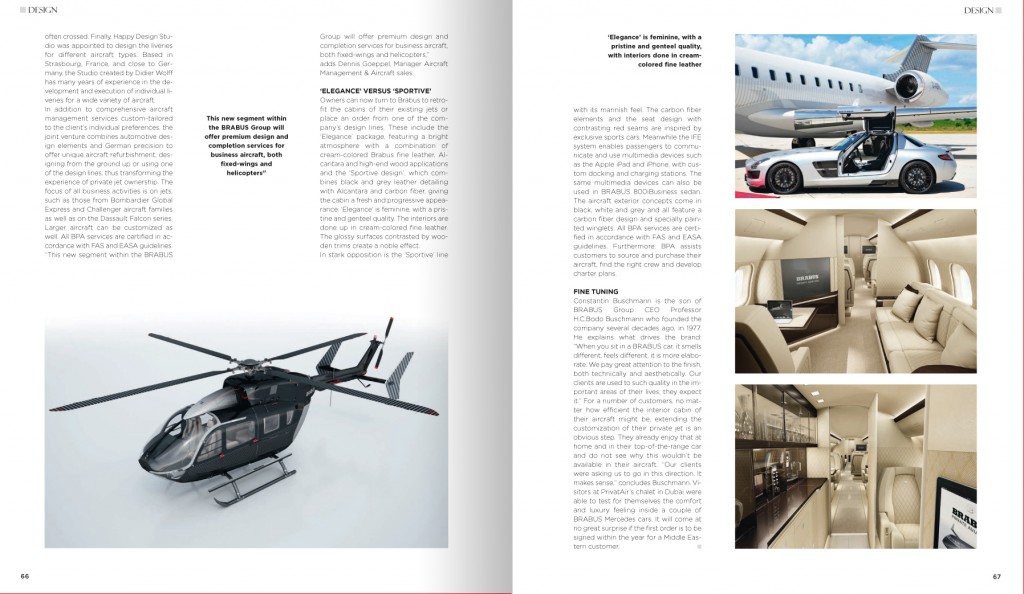
Read full article (text version) Source : ALTITUDES ARABIA / This article is reproduced for archival purposes. Brabus Private Aviation — ‘Sur mesure’ jet tuning — Lovers of refined design now have reason to take notice: Brabus Private Aviation (BPA) has entered the market. Created in partnership with PrivatAir, RUAG and Happy Design Studio, the venture was officially launched in Dubai on December 12, 2012, during MEBAA. BPA aims to reshape the luxury aviation sector by transposing Brabus’ German savoir-faire—honed over decades of high-end automotive customization—into business jet interiors and liveries. “Our concept is to transfer the expertise we’ve developed with top-of-the-range cars into business aviation,” explained Constantin Buschmann, CEO of BRABUS Private Aviation. The idea emerged following a meeting at the Dubai Air Show in November 2011 between PrivatAir’s Senior Vice President Christian Hahn and BRABUS CEO Constantin Buschmann, who explored the convergence between automotive and aviation luxury. Together with a network of specialized partners, BPA offers a one-stop-shop solution covering the entire lifecycle of an aircraft. At the core of its offering lies “Made in Germany” design and engineering, executed to exceptional standards. While refined interiors often call for discreet exterior liveries that convey understated elegance, some owners will favor the bold, distinctive designs for which Happy Design Studio has become known. Based in Strasbourg, the studio led by Didier Wolff was entrusted with developing exterior liveries across multiple aircraft types, bringing years of experience in bespoke aircraft design. BPA combines automotive-inspired aesthetics with aeronautical precision to deliver fully customized aircraft—whether through complete refurbishment, new completions, or predefined design lines. Its scope primarily targets business jets such as Bombardier Global Express and Challenger families, as well as Dassault Falcon aircraft, while also extending to larger platforms and helicopters. All services comply with FAS and EASA certification standards. Within the BRABUS Group, this new division introduces premium design and completion services for both fixed-wing aircraft and rotorcraft. Owners can refit existing cabins or select from curated design lines such as “Elegance” and “Sportive.” The Elegance package emphasizes a bright, refined atmosphere, combining cream-colored leather, Alcantara and fine wood finishes for a soft, sophisticated feel. In contrast, the Sportive line adopts a more assertive identity, with black and grey leather, carbon fiber elements and red-stitched detailing inspired by high-performance cars. Advanced in-flight entertainment systems integrate seamlessly with personal devices such as iPads and iPhones via dedicated docking and charging stations. Exterior concepts revolve around monochrome palettes—black, white and grey—enhanced by carbon-fiber-inspired graphics and custom-painted winglets. BPA also supports clients in aircraft acquisition, crew sourcing and charter structuring. For Constantin Buschmann, the philosophy remains consistent: “When you sit in a BRABUS car, it feels and smells different. We apply the same level of attention to detail—both technical and aesthetic—to aviation. Our clients expect nothing less.” For a clientele already accustomed to bespoke environments in their homes and vehicles, extending that level of personalization to private jets is a natural progression. Early interest suggests that the first orders—particularly from Middle Eastern customers—are only a matter of time.

ARTICLE N° 180 / ALTITUDES EUROPE

Press

2025
2024
2023
2022
2020-2021
2019
2018
2017
2016
2015
2014
2013
2012
2011
2010
2009